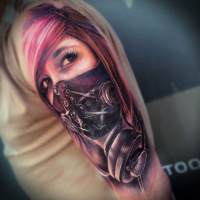
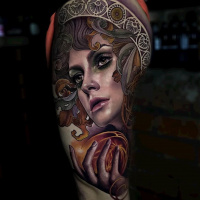
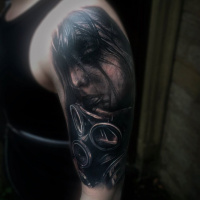
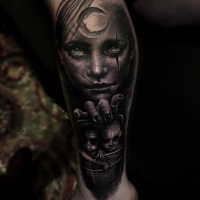
Tattoo design images
Tattoo images, tattoos pictures, tattoo designs and more can be found on our site primarily dedicated to the art of tattoo.
Tattooing is a slow process of applying a permanent image to particular parts of the body involving pigmented inks being injected under the skin via needle puncturing or cutting the skin. Afterwards, special cells create a blocking tissue that prevents allergic reaction and further pigment spread.
First tattoos pictures appeared more than 6000 years ago and possessed something more than just plain ornamental value. First tattoo images already bore the insignia of the tribe, family, totem or a class in society. Tattoos had also been associated with hidden magic powers. "Tattoo" as a term was firstly used by James Cook, the famous explorer, who mentioned it in the journal of his voyage to Polynesia, 1773. "Tattoo" is the native Tahiti language for "picture", "image". Cook was completely mesmerized by the exotic tattoo art of native people of Polynesia. So far, Polynesian tattoos are the oldest tattoos ever found. First inks were a mixture of different ground-mined minerals and ores e.g. cinnabar ore, coal ore, ochre. People who lived during the Middle Ages made tattoos using powder mixtures. In modern tattoo world special synthetic inks are widely used and manufactured with only purpose of tattooing. These inks are safe, hypoallergenic, don't fade away. Now back to first tattoo pictures.
The early design resembled carved patterns of different elements and was known for astounding technique and complexity of design. The original patterns consisted of spirals, winding ribbons, straight, diverging and converging lines. Whose tattoos were closely connected to religious rituals, and granted wearer's protection. Tattoos first emerging in Europe didn't have a specific name – names varied depending on the nation. Usually the names included words like "mark", "imprint" and "carved image". Tattooed people in Europe were referred to as "marked with dotted line" or "coloured". Interestingly, the term for tattooing was translated as a "stabbing tattoos". The term "Tattoo" brought by Cook actually meant this particular way of applying a tattoo, yet his term wasn't adopted by Europe at once. Originally "tattoo" was referred to Tahitian tattoo exclusively, but time passed and the term had spread across most of the Europe. "Tattoo" was borrowed by numerous languages and filled the missing spot in the lexicon, giving the "dotted pictures" an accurate description. As for other written European records mentioning tattoo, it first one can be found in 'Medical dictionary' written in 1856 by P.Nysten, a Belgian doctor.
Among others, E. Littre had included the word Tattoo into 'Dictionnaire de la langue Francaise' (French language dictionary).
Motivations behind getting a tattoo nowadays vary from heritage, tradition and religion to the sake of getting a tattoo. These exist even today (Hawaii, Tahiti), but today people make tattoo driven by urge self-expression or if they wish to document their life story or particular important events. Sometimes people just like to look and feel tough. Nowadays there are countless styles and types of applying the tattoo.
Here are some of the more common types of tattoo.
There are permanent, temporary, permamakeup, Mehndi tattoos. Permanent tattoos last forever because the ink is put under epidermis, temporary don't last forever because they are put on top of a skin like a sticker, mehndi (Henna) are made by staining your skin with a dye made of an Indian plant. Mehndi tattoos last for about 28 days. Mehndi colours vary from pink to dark brown and design depends on a number of factors.
Permamakeup or permanent maquillage stays on for about 4 years. The good example of this can be elimination of some minor cosmetic issues (covering the unattractive spots and such), tattooing eyebrows, lip lining etc.
The general tattoo styles you can find at the nearest tattoo parlour are listed below.
- Tribal tattoo style. Being the most ancient, Tribal style originates from many tribes of Oceania. Characteristic features are line patterns that are dictated by the tools used to create a tribal tattoo. Traditional tribal tattoos played a role of protective talismans of sorts. Traditional ink colour is black. Modern tribal tattoos are complicated in form and remain somewhat true to the original.
- Celtic tattoo style. It originated from Celts, mainly in Europe's Scandinavian parts populated by Celts. Celtic style currently remains most popular in the world Its beauty lies within its ornamental forms, symmetrically intertwined stylized natural elements like vines and leaves, it is also rich with animal symbols and elements, perfection of geometric shapes, druidic knots bring a great deal of elegance onto its wearer. Eventually this style evolved, borrowed additional traditional elements typical for neighboring cultures of Rome and some lesser Slavonic tribes. This combination creates real masterpieces.
- Oriental tattoo style. The places of origin are scattered across China, Laos, Japan, Burma, Vietnam, India, Nepal and Philippines. Main themes are eastern dragons, water symbols, fish, hieroglyphs, animal pictures, Buddhist symbols etc. Some tattoos are made to be seen only when a person takes a bath or making love to someone.
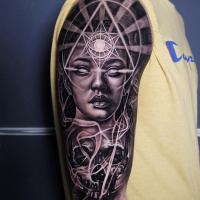
- Mystic style tattoos have according elements e.g. magic symbols like pentagrams, runes prayers etc. Ideally they have to trigger some conditions similar to the symbolic messages and meanings hidden within the tattoo (wealth, affection, courage, power) Some call them Karmic tattoos, it's believed to affect destiny of a wearer.
- Classic tattoo style is surprisingly not an old style. It's just an accumulative of different simple images e.g. animals, flowers, weapons, hearts, cards etc. Some of them are silly, others – sad. It has no defined colour palette or rules.
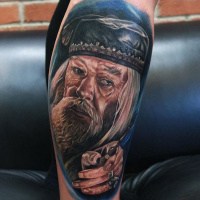
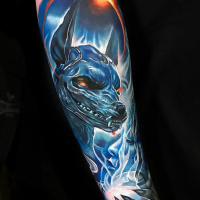
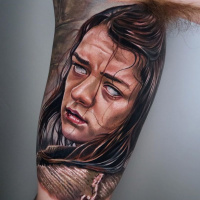
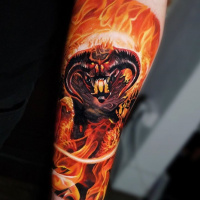
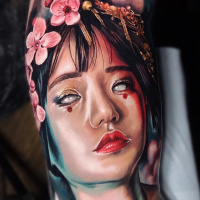
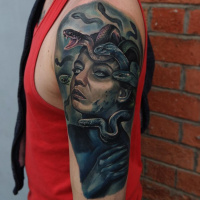
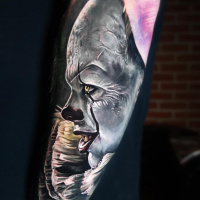
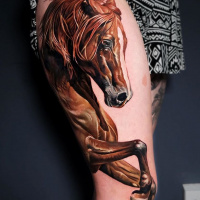
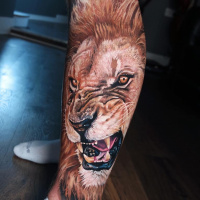
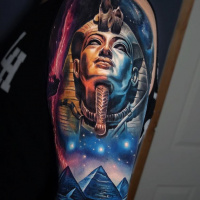
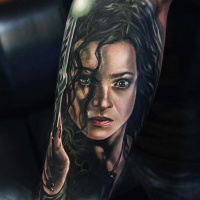
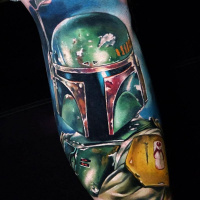
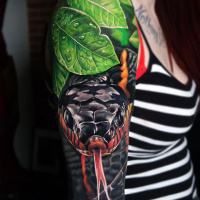
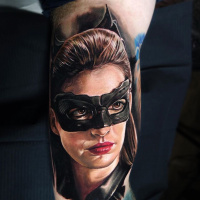
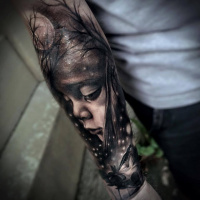
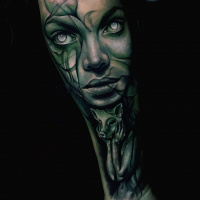
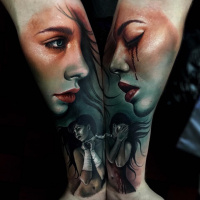
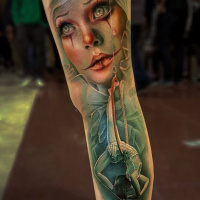
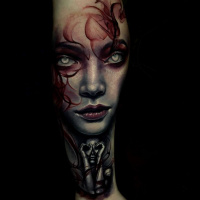
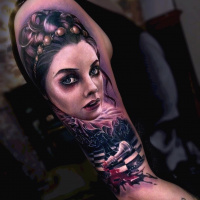
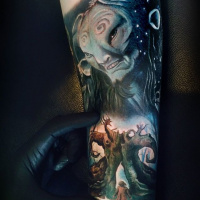
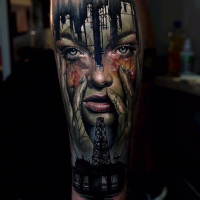
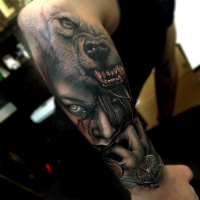
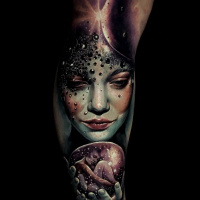
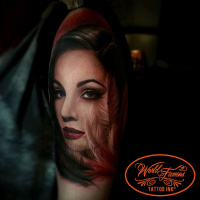
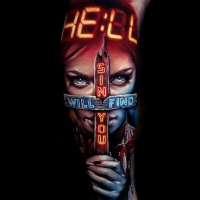
- Realistic tattoo style. It's a pretty modern style compared to above-mentioned ones. The thematic content is pictures of fauna or humans in their realistic image, similar to a painting style. Realistic style tattoos are the liveliest looking and are quite popular. Due to simplicity of application technique, this type of tattooing is called "photo on a body". This can be a photo of your bellowed one or a pet.
The following styles are moderately young and had been appearing during the twentieth century.
- Biker tattoo style. This style appeared simultaneously with biker movement after the WWII as an essential attribute. "Biker" derived from "motorbike" and means "a fan of motorcycles". The main theme is motorcycle and everything connected to it – engine parts, burning wheels, but occasionally there are skulls, predators, fire, angels, steel crosses and numerous other marks of biker community. The general feel to this style is aggression and toughness. Some tattoos may feature different styles in combination with some but if they're made by bikers for bikers they are considered biker tattoos. There are no harsh rules when it comes to tattoo. It's particularly cool that biker subculture gave birth to an entire tattoo style.
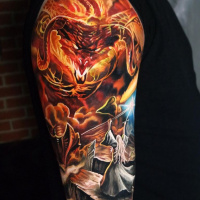
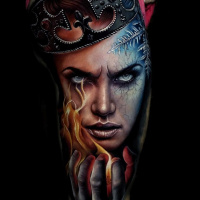
- Fantasy tattoo style appeared from fantasy fiction. Main themes are pictures of mystic animals, races, creatures of light and darkness: trolls, giants, wraiths, ethereal creatures, phantoms, mermaids, elves, dwarves, mages, as well as infinite variations of armored warriors, maidens, undead, basically everything from the countless fantasy worlds. Origin of those tattoo designs are obviously fantasy literature. A person wearing fantasy tattoos can either be a fan of fantasy or he has a rich deep inner world.
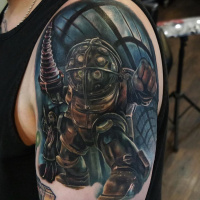
- High-tech and biomechanics tattoo style. It's a very young style that received large amount of popularity. The style is very unique. It consists of such elements as, gears, metallic wires, rivets, bolts, machinery details. It's designed to look like you're a robot underneath the skin. So it would be pictures of torn patches of skin with gears and all that metallic detail being "exposed". It looks extremely innovative and contemporary. Usually, dark shades are used with attention to details and shadowing to provide a realistic feel. A mixture of machinery and a vine growing through it creates an unforgettable, almost post-apocalyptic feel.
The amount of existing styles is incredible and every day something new appears in the world of tattoo. Tattooing techniques have distinct differences depending on region the technique originated from or the tattoo type. But here's a bunch of them.
- Method #1. An improvised tool is made of a sharpened paperclip or a notebook bracket. Then this tool needles the skin with the inked sharp tip according to the picture outline. This method is very time consuming, dangerous to the person being tattooed because it's rather unsterile. The method is used in the army, jail, among teenagers on the street—in any place, where it's hard to find a professional tattooist.
- Method#2. A special stencil is used to apply the tattoo. The tool is made of sturdy rubber piece that has sharpened needles along the outline of a tattoo design. This ink-dipped stencil, after put on a person's body and with a painful slap the needles pierce through one fifth of an inch through the skin. Such procedure is time consuming, primitive and painful.
- Method#3. Special device tinkered out of simple domestic electric razor is used to inject ink under the skin. The method is quite painful, takes a lot of time, highly dangerous and life threatening.
- Method#4. Skin is cut with a blade along the outline of a tattoo design with the ink consequently being literally rubbed into person's fresh wounds. This "procedure", along with usual time consuming factor and primitiveness poses real threat to client's health and life. Please, reconsider your options before making a tattoo, because whatever they might say, only the fifth method is truly safe.
- Method#5. (Modern technology approach) The tattoo design is applied under the client's skin using a special device called induction machines or rotary machines and special ink. Tattoo ink is applied via vibrating needles attached to the tattoo machine. Needles carry ink under skin via little injections. The procedure is relatively painless, but more importantly, It's sterile and safe because sterile disposable needles are used.
Important: It is very important that you choose wisely where to get your tattoo. Also it's also advisable for you to consult a professional dermatologist.
There are ways of removing unwanted tattoo.
- Dermabrasion. The skin is resurfaced using abrasive materials. The method is used for small tattoos.
- Laser removal. Specially attuned laser breaks down pigment into particles that are later absorbed by the body. The method can sometimes be used to refine some tiny tattoo flaws.
- Exposure to chemicals. This method is not completely proven to be safe and in some cases involves acid.
Sadly, sometimes it is impossible to remove 100% of the tattoo.
Always be sure you will not regret it in the future, because tattoo can affect your life in many different ways, not always in a good way and so if you're having doubts of any second thoughts, know that you'll always have an opportunity get yourself a tattoo but you will certainly have no time to "unget" it, right?